

Tanzania Safari · · 5 min read
Tracking the Serengeti Wildebeest Migration
Follow the epic journey of the Serengeti wildebeest migration: where the herds are through the year, and how to see them by guided safari, hot-air balloon or mobile camp.
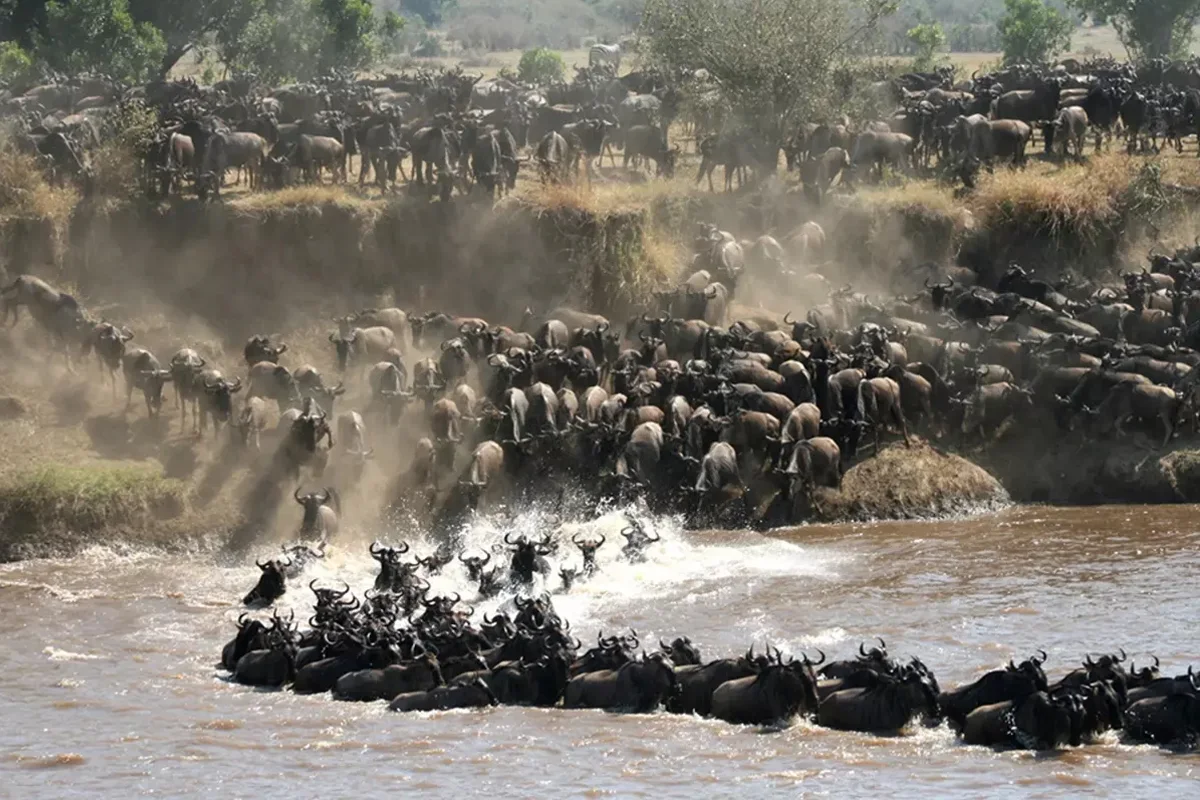
Welcome to the ultimate guide to tracking the Serengeti wildebeest migration! This natural phenomenon is one of the most awe-inspiring events on the planet, drawing visitors from around the globe to watch hundreds of thousands of wildebeest, zebras and other grazers cross the vast plains of East Africa. This guide gives you everything you need to know to plan your journey and experience the wonder of the Serengeti migration first-hand.
Timing the Great Migration
To plan your trip effectively, it is important to understand the timing of the Great Migration. Although the migration continues all year, the location of the herds changes with the seasons.
- From December to March, the herds are usually in the southern Serengeti, particularly around Ndutu. This is where they calve, giving birth to their young.
- From April to June, the herds begin their journey north, passing through the Seronera area of the Serengeti.
- From July to September, the herds can be found in the Western Corridor of the Serengeti and often cross the Grumeti River during this period.
- From October to November, the herds move into the northern Serengeti and eventually cross into the Maasai Mara in Kenya.
Understanding these seasonal movements helps you time your visit to coincide with the best opportunities to see the Great Migration in action.
Guided safaris
A guided safari is the most popular and effective way to track the migration. These safaris are led by experienced local guides and trackers with an intimate understanding of the herds’ movements. They can navigate the vast wilderness and take you to the best vantage points for watching and photographing the migration.
Choosing a reputable safari operator is crucial to a fulfilling experience. Look for operators that prioritise wildlife conservation and sustainable tourism. They often employ knowledgeable guides who not only enhance your safari but also share valuable insights into the ecosystem, animal behaviour and conservation work.
On a guided safari, you can immerse yourself in the wonders of the Great Migration while benefiting from the expertise of experienced professionals. Whether you are a seasoned wildlife enthusiast or a first-time safari-goer, a guided safari helps you make the most of your journey and create memories to last a lifetime.
Hot-air balloon safaris
A hot-air balloon safari over the Serengeti promises an experience that will stay with you for a lifetime. Picture yourself suspended in the sky, drifting silently above the vast plains as the sun begins to rise and casts a warm glow over the landscape below. This unique vantage point offers an unparalleled view of the Serengeti’s huge herds and breathtaking scenery.
As the balloon glides gently through the air, you watch the Serengeti wake up. The golden light of dawn illuminates the savannah, painting the horizon in vivid shades of orange and pink. Below, great herds of wildebeest and zebras move in synchronised harmony, their silhouettes casting long shadows across the ground.
From this bird’s-eye view, you gain a new appreciation of the sheer scale and beauty of the Serengeti. The stillness of the morning air is broken only by the occasional sound of wildlife stirring below, creating a deep sense of peace and serenity.
As your balloon drifts gracefully across the landscape, your senses come alive with the sights, sounds and smells of the African wilderness. You can spot a wide array of wildlife, from towering giraffes to majestic elephants, all from the comfort of your floating viewpoint.
But perhaps the most magical moment of all is watching the sun rise above the horizon, casting its warm rays across the savannah and bathing the landscape in a soft, ethereal light. It is a scene straight out of a dream, and one that will stay etched in your memory long after your balloon safari ends.
Staying in mobile camps
For an authentic migration experience, stay in mobile camps that follow the herds. These camps provide cosy accommodation right where the action is, letting you fall asleep to the sounds of the African wilderness and wake up to wildebeest grazing nearby. It is a deeply immersive way to connect with nature and live in tune with the rhythms of life on the Serengeti.
Research and planning
Before setting off, take the time to research and plan your trip carefully. Keep informed about where the herds are, as their location varies with factors such as rainfall and vegetation. Remaining flexible and adaptable will help you get the best possible experience.
Talk to safari experts and read recent migration reports to get a sense of where the herds currently are. This will help you plan your itinerary and choose the best time and place to see the migration.
Be prepared to adjust your plans in light of the latest information. Conditions in the Serengeti can change rapidly, so it is important to stay flexible and open-minded during your journey.
By doing your research and staying informed, you will be better equipped to make the most of your safari and increase your chances of witnessing this incredible natural spectacle first-hand.
Respecting wildlife and the environment

During your safari, respect for wildlife and the environment must come first. Keep a safe and respectful distance from the animals and follow your guides’ instructions to protect both your own safety and the well-being of the wildlife.
Practise responsible tourism and conservation by following these guidelines:
- Observe wildlife from a safe distance: avoid approaching animals too closely or disturbing their natural behaviour. Use binoculars and telephoto lenses to watch them from afar.
- Stay on designated trails: stick to designated paths and roads to minimise your impact on the environment and avoid damaging sensitive habitats.
- Minimise noise and disturbance: keep noise to a minimum to avoid startling or stressing wildlife. Switch off mobile phones and other electronic devices to maintain a peaceful atmosphere.
- Respect feeding and breeding areas: avoid disrupting feeding and breeding areas, particularly at sensitive times such as the breeding season or when animals are caring for their young.
- Dispose of waste properly: take all your rubbish with you and put it in designated bins. Never litter or leave behind waste that could harm wildlife or pollute the environment.
- Support local conservation efforts: consider donating to local conservation organisations or taking part in community-based conservation initiatives to help protect the Serengeti ecosystem.
By practising responsible tourism and conservation, you can help preserve the Serengeti ecosystem for future generations and ensure the long-term sustainability of this iconic wilderness.
Tracking the Serengeti wildebeest migration is a journey like no other, offering a profound connection with the natural world and the timeless rhythms of life on the African savannah. Whether you watch it from the ground on a guided safari, soar above it in a hot-air balloon or camp among the herds in a mobile camp, the experience is sure to leave a lasting impression. So pack your bags, set out on your adventure and prepare to be swept away by the magic of the Serengeti migration.
Explore Tanzania’s many wonders, from the captivating Ngorongoro Crater, teeming with wildlife, to majestic Kilimanjaro, Africa’s highest peak, with its breathtaking landscapes. Complete your adventure with a visit to the enchanting island of Zanzibar. Join us for an unforgettable Tanzania safari tour!
