

Tanzania Safari · · 5 min read
Tanzania’s Wildebeest Migration Peaks This Week: A 2024 Safari Highlight
Why this week is prime time to witness Tanzania’s famous wildebeest migration in the Serengeti, where to watch it and how to prepare for a migration safari.
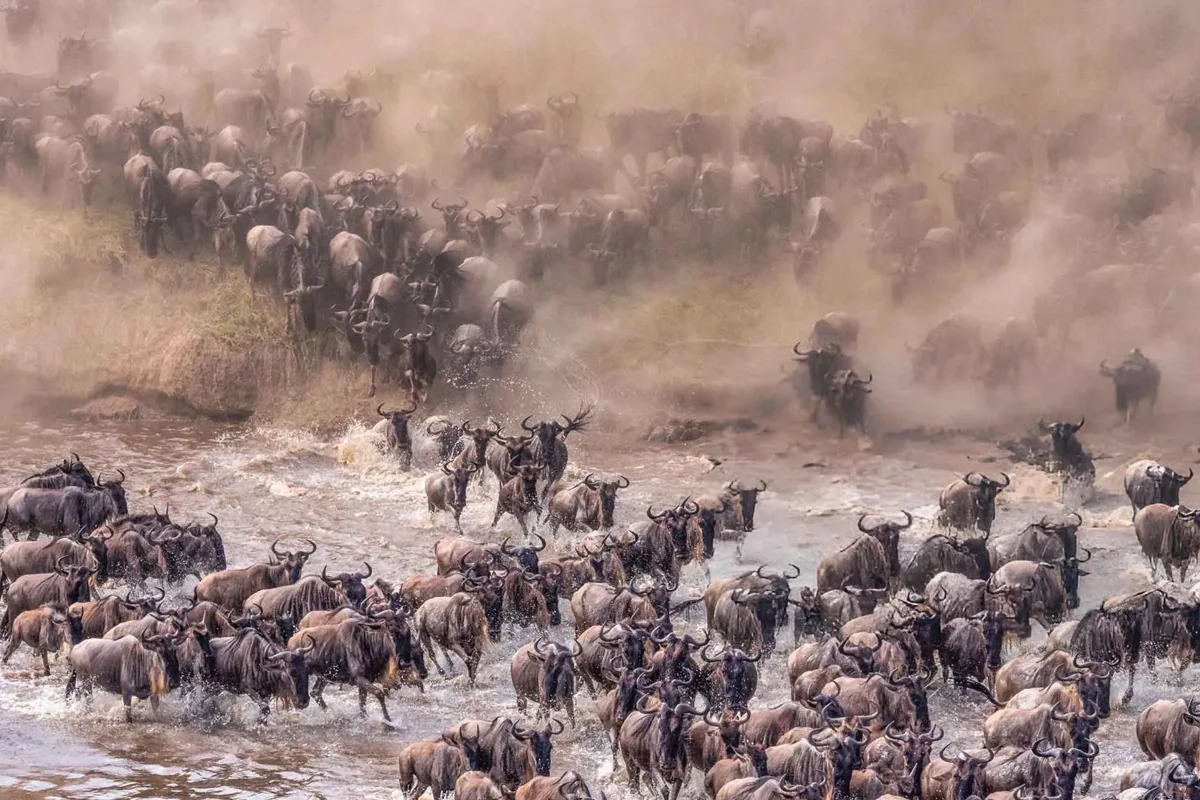
The 2024 wildebeest migration in Tanzania
The iconic wildebeest migration, one of the world’s most breathtaking natural events, has reached its peak this week in Tanzania, drawing travellers from around the globe. Each year, millions of wildebeest, zebras and other grazing animals travel across the Serengeti in a grand circuit through Tanzania and Kenya, following the rains in search of fresh grass. This week’s spectacle marks a critical point in the migration, as vast herds move across Tanzania’s landscapes, making it an unforgettable highlight for safari enthusiasts in 2024.
1. The great migration: a natural wonder
The wildebeest migration is one of the most extraordinary sights in the natural world. With approximately 1.5 million wildebeest, 200,000 zebras and countless other animals taking part, the journey is full of obstacles, from crossing crocodile-infested rivers to escaping the claws and jaws of big cats. This seasonal migration is not just a visual feast but a testament to the survival instincts of these animals.
2. Why this week is special for the migration
As 2024 unfolds, weather patterns and rainfall have made this week a critical moment in the migration cycle. In early November, the herds are typically moving through the northern Serengeti, crossing rivers such as the Mara and Grumeti. With abundant food and water, this week sees the wildebeest gathering in massive numbers, creating awe-inspiring views and giving travellers the best opportunity to witness dramatic river crossings.
3. Key spots to witness the migration
For the best safari experience, there are several strategic spots within Tanzania’s Serengeti where travellers can catch the migration at its most intense:
- Mara River: Known for exhilarating river crossings, the Mara River is a prime location to see wildebeest braving the waters while evading crocodiles.
- Grumeti River: Another hotspot for crossings, the Grumeti River sees large numbers of wildebeest, especially in early November.
- Lobo Valley: Located in the northern Serengeti, the Lobo Valley offers expansive views where travellers can watch herds grazing and predators on the prowl.
4. A closer look at the wildebeest migration experience
During peak migration, safari-goers can witness a wide range of behaviour. From playful interactions within the herds to life-and-death chases between predators and prey, each moment captures the raw beauty of the African wilderness. Guides often offer expert insight into the migration’s dynamics, helping visitors understand the complexities of this massive wildlife event.
5. Unique challenges of the 2024 migration
The 2024 migration has faced unusual environmental conditions, from fluctuating water levels in the Mara River caused by climate variation to shifting grassland availability. These changes have affected animal movement patterns and condensed the migration into shorter, more intense intervals, making sightings all the more spectacular but less predictable. Conservationists are closely monitoring these changes to understand their potential impact on the long-term health of the Serengeti ecosystem.
6. How the migration affects Tanzania’s tourism industry
The wildebeest migration is a major draw for Tanzania’s tourism industry, contributing millions to the country’s economy. This week’s peak attracts thousands of visitors, filling camps, lodges and safari vehicles. Many tour operators offer specialised packages to see the migration, giving visitors close-up views while following strict conservation guidelines. The migration’s popularity highlights the importance of sustainable tourism practices to protect these wildlife habitats.
7. Preparing for a migration safari
For those planning a safari, timing and preparation are key. Since this week marks the migration peak, early booking is essential to secure accommodation near the main crossing points. Many safari camps and lodges offer amenities designed specifically for migration viewing, including riverfront tents and sunrise or sunset game drives. The right gear, such as binoculars, weather-appropriate clothing and good-quality cameras, can enhance the experience, allowing travellers to fully capture and enjoy the migration’s grandeur.
8. Sustainable tourism and conservation efforts
With Tanzania’s national parks and reserves committed to conservation, sustainable tourism has become essential. Park authorities limit the number of vehicles at key viewing points to minimise disturbance to the animals. Eco-friendly lodges and camps have also adopted sustainable practices, including reducing waste and using renewable energy, to preserve the Serengeti’s pristine landscapes for future generations.
9. Travel tips for witnessing the migration peak
To make the most of this experience, here are a few travel tips for safari-goers during migration week:
- Book early: Secure accommodation and guided tours well in advance to ensure prime viewing locations.
- Bring essential gear: High-powered binoculars, cameras with telephoto lenses and clothing that protects against sun and dust are essential.
- Go with a knowledgeable guide: Experienced guides can find the best viewing spots, explain animal behaviour and enhance the overall experience.
- Be patient: The migration is unpredictable, and you may need to wait to witness significant crossings.
10. What makes the 2024 migration unique
Each year brings its own nuances to the migration, and 2024 has seen notable shifts in timing and animal movement patterns. These changes, shaped by rainfall, climate shifts and ecological factors, make this year’s migration particularly intriguing for researchers and wildlife enthusiasts alike. Tanzania’s conservation and sustainable tourism efforts help ensure that this awe-inspiring event remains accessible for future generations while maintaining a delicate balance within the ecosystem.
The wildebeest migration, peaking in Tanzania’s Serengeti this week, offers a window into one of nature’s most spectacular events. In 2024, the migration highlights Tanzania’s dedication to both preserving wildlife and supporting sustainable tourism. This unforgettable experience gives travellers a rare opportunity to connect with the raw beauty of Africa, making it a must-see event that reflects the resilience and splendour of the Serengeti.
Frequently asked questions
1. When is the best time to witness the wildebeest migration in Tanzania?
The migration can be seen at different stages throughout the year, but peak crossings typically occur from July to November, with early November being ideal for river crossings.
2. How does climate change affect the migration?
Climate change affects the timing and availability of water and grazing, leading to shifts in the animals’ movement patterns.
3. Where is the best place to stay during the migration peak?
Lodges and camps near the Mara and Grumeti rivers, as well as in the Lobo Valley, offer excellent access to migration viewing points.
4. Can the migration be seen outside Tanzania?
Yes. The migration also passes through Kenya’s Maasai Mara, especially from July to October, but it takes place predominantly in Tanzania’s Serengeti.
5. How can I make my safari more eco-friendly?
Choose lodges with eco-friendly practices, minimise waste, and respect wildlife by following the guidance of conservation-minded tour operators.
Start your Tanzanian adventure
Explore our pages to discover:
- Climbing Mount Kilimanjaro
- Kilimanjaro climb packing list
- Top Kilimanjaro FAQs
- Cultural tours across Tanzania
- Exciting day trip tours
- Lake Manyara National Park
- Ngorongoro Crater
Start planning your unforgettable journey with us on our website.
